Showing posts with label Bespoke. Show all posts

Wednesday, 13 April 2011

Wallpaper Wonders

Interiors Tips - Wallpaper

Now that Spring is firmly in the air Interior Designer Jamie Hempsall looks at the latest wallpaper trends and offers you his top tips for successful decorating.

It seems that the interior world’s appetite for wallpaper continues to grow and grow.  The last decade has seen it transform from something vaguely passé to a key element in many design schemes.

I favour wallpaper over a painted finish in my room designs as I consider that the overall effect is generally much softer and, if treated correctly, wallpaper is incredibly resilient giving a good finish that will last for years.

One of the emerging themes in wallpaper this Spring are recollections of the “Grand Tour” and early explorers.  Several ranges feature soft graphics reminiscent of historical printing techniques or the pencil drawings of the pioneering travellers who first began to map the globe and report on their amazing findings.

Cartography, calligraphy and mathematical symbols also feature in a number of collections which nod in the direction of early scientific discoveries.


The Intaglio Collection from Zoffany (www.zoffany.com - 0844 543 4748) is named after an early method of printing where ink is wiped into recesses or troughs on the printing plate – in contrast to relief printing where raised surfaces are inked up for printing.  The collection features a range of non-woven papers featuring exquisite maps of London taking from an original design on a silk handkerchief dating back to 1832, which build to form a beautiful pattern that only reveals its origins on close inspection (£48 per roll).  


There are also a number of beautiful architectural representations including Facade which was inspired by the pen and ink drawings of the great Renaissance architect, Andrea Palladio (£48 per roll).


The Navigator Collection from Andrew Martin (www.andrewmartin.co.uk - 020 7225 5100) also features wonderful early UK maps in their Traveller design (£39.90 per roll) and an intriguing array of handwritten mathematical calculations in Pythagoras (£39.90 per roll) which is available in a selection of muted backgrounds – the perfect solution for a home study.


Osborne and Little (www.osborneandlittle.com - 020 7352 1456) has introduced the Grand Tour collection inspired by the artistic and architectural treasures of Italy, as reported by aristocratic Englishmen on the Grand Tour of Europe.  Laguna features monochrome storks, straight out of an artist’s sketch book (£46 per roll). 


In contrast Loggia is an innovative holographic foil print of an Italianate staircase rendered in black and silver which results in a design, initially puzzling to the eye, but ultimately visually stunning (£78 per roll).


The Linnaeus collection from Designers Guild (www.designersguild.co.uk - 020 7351 5775) returns to the sketch books of the early tourists with finely drawn graphics and restrained elegance.  The topiary sketches in the Linnaeus design are restfully simple single colour renditions on a plain white background (£45 per roll).  Bergius features a strong contemporary classical design (£45 per roll).

In general, I use wallpaper to contribute to a scheme, rather than dominate it: choosing colours or designs that pick up on the key elements of the room, without imposing too much of their own personality.  That being said, if you are opting for plain fabrics for your soft furnishings these can be artfully framed by an oversize print with plenty of contrasting colour.

When choosing a design, it is important to consider the overall proportions of your room.  If you are opting for a large pattern, ensure that your room is big enough to cope with it.  You should be able to stand far enough away from a design to appreciate it in its entirety or if this is not the case, visitors to your room can feel disoriented.  Be aware that large patterns tend to make a very bold statement in a small environment; one that most of us would find difficult to live with.  

If you are worried about wear and tear in high traffic or areas with limited space (such as staircases) then it is a good idea to opt for gloss finish or vinyl wallpapers that tend to be more hardwearing.  However, you can also use a protective water based decorator’s varnish which can be applied on top of the paper to provide a surface more resistant to marks and scuffing. 


Hanging your wallpaper correctly is vital – edges need to butt together and it is important to pay attention when matching the pattern repeat to ensure that the end result is seamless, rather than appearing to be a selection of disjointed panels.   Never skimp on wallpaper paste – it is worth paying for a good quality solvent that will stand the test of time. 

If applying paste strikes the fear of dread into you, look for non-woven wallpapers.  These allow you to put the paste directly on the wall and then apply the dry paper making the task considerably easier (and allowing you the flexibility of manoeuvring the paper a little more on the wall).

Ultimately, wallpapering is one of those tasks where it really is worth getting in a professional if you are unsure of your capability.  After all, when you look at the cost of each roll it really does make sense to get it right first time.

Jamie Hempsall is an award winning interior design and member of the British Institute of Interior Design.  Contact him via his website www.jamiehempsall.com or call him on 0800 032 1180.


Thursday, 10 March 2011

Making the most of what you have!

This is often the time of year when people get a little restless and decide they need to move home because of a lack of space. In the current economic climate it makes sense to re-assess your current living space before making any rash moves.

Most of us quickly settle on specific uses for locations throughout our home and live with these until we relocate. However, they are not always logical and can mean that a fair degree of our property is left under-utilised.

When clients engage us to develop their home, we undertake a lifestyle interview that helps indicate what they really need from their environment (which may well initially differ from what they think they want). Having an objective set of eyes upon the problem can help you break away from your tried and tested regime to really see how you should be using your available space.

You should begin by ignoring the existing layout and use of your rooms and considering exactly what facilities you need.  You need to do this as an objective academic exercise - literally list down all uses and how often this use will occur. It is important to be realistic, not idealistic.  It is incredibly useful to have an unbiased third party to help, so why not invite a friend around and do this over coffee (not a glass of wine as the end results can be very different!!) 

Try to think ahead for the next couple of years to ensure that you take into consideration any changes likely to arise (for instance, a playroom may well be superseded by the need for a study as children move from Primary to Secondary School).

Once you understand your most important needs, take a close look at how you use your home currently and objectively assess whether you are should re-define some of your rooms.

Three of the most common issues in UK homes are:

 *  rarely used dining rooms
 *  empty guest rooms
 *  crowded box rooms

The separate dining room harks back to times when we were more formal about our dining requirements. I never advocate removing a dining area altogether as I think it is important that families have a space within which to eat and commune together. However, in the current age of informal entertaining this function is better situated within the kitchen to create a heart of the home. Regaining the use of an idle dining room can add a considerable additional day to day living space to incorporate as a children’s TV area or home study.

We also often see teenage children crammed into a small single room, whilst the house possesses a perfectly decent double bedroom which is kept for guests. Unless you are accommodating visitors for the majority of the year this is not an effective use of a room. Teenagers have the need for additional space for study (as well as the plethora of games consoles and other media equipment), so it makes sense to re-assign the use of the rooms and consider mattresses).

Similarly, Box Rooms often become dumping grounds for rarely needed general rubbish. Start by careful culling the contents (ruthlessly assess the real cost to you in lifestyle space to hold onto items). Then consider how often you will actually need instant access to the remaining items and find more appropriate storage locations (i.e. if you will rarely need it store in an attic or shed). Re-claiming a Box Room and carefully fitting it out can provide you with space for a small study, play room, dressing room or even a home gym.

If your needs are a little more complex you really should also consider ices of a good interior designer and/or architect.  This is what we do everyday for a living and you would be surprised at the solutions we have had to come up with over the years.  If you have an issue, chances are we have a way of solving it.

Re-working the division of interior spaces can drastically reduce under used space (particularly when considering redefining hallways or corridors which can add significant square footage to even the smallest home). Areas such as under the stairs are also often ideal spaces to install an additional WC or small home office area.

I would always advise any you carefully consider any "Open plan" living designs, as ideal as it sounds there are still often needs for privacy in family homes and heating costs have to be taken into account.   

Where you are combining rooms (such as knocking through separate dining and living rooms) consider including recessed sliding doors that disappear into the wall to allow you to use the area more flexibly and to reclaim some solitude when necessary.

Depending on the construction of your home you may also be able to move internal walls to “steal” space from low usage rooms to create larger actual living areas.

A final vital point to consider if you are making interior changes is the impact it will have on the value of your home (especially if you only plan to live there in the short or medium term). Before embarking on any major structural change seek advice from a property professional to avoid inadvertently reducing the value of your home (for instance, by sacrificing bedrooms to bathrooms in a property with less than 4 bedrooms) or over-developing your home for the area that you live in.

Jamie Hempsall is an award winning interior designer and member of the British Institute of Interior Design. Contact him on 0800 0321 180 or visit his website http://www.jamiehempsall.com/.

You can also follow Jamie on Twitter @jamiehempsall.


Monday, 21 February 2011

The Mysteries of a successful Oriental Interior revealed!

Interiors
February 3rd saw us enter the Chinese Year of the Rabbit which according to some interpretations is a year when good taste and refinement shine on everything and people will acknowledge that persuasion is better than force. So we can remain ever optimistic!

The East has influence interiors from virtually the moment that trading routes opened, from the blue and white patterns that have become a staple of porcelain design to the Toile de Jouy wallpapers and fabrics beloved of Country House and French themed interior design.

I adore the opulent colours found in classic Chinese design which has a strong link to nature and natural beauty. Each colour has specific meaning and is thought to help influence the lives of those in the household.

Of particular importance is red which features heavily at New Year and also other key celebrations. Red symbolises fortune, happiness and joy. Not a bad thing to introduce to any home.

If you want to add some Oriental influence there are no shortage of options, but ensure that it is not a half-hearted effort. The key to success is a bold, imperial colour palette (including red, emerald, gold and black).


Lacquered cabinetry with strong, clean lines makes an immediate statement (and often provides practical storage). There are varying qualities around, but a bit of investment will result in more longevity and enjoyment of your piece. Simple one colour designs with good brassware are classic, but why not embrace the rich depictions of nature which are a key feature of good pieces. Two of my favourites are the Red Butterfly cabinet from Artefact Interiors (£698 – www.artefactinteriors.co.uk; 0845 017 8275) or the Chinoiserie Red Lacquer Small Bedside Cabinet from Supatra (£325 - www.supatra.co.uk; 01753 858885).


Fabrics and soft furnishings are vital to create a warm, welcoming environment. Comfort and feel are key so include soft finishes and silks. John Lewis stock a wonderful range of items in their Pip Studio Chinese Rose Range (from £20 - www.johnlewis.com; 0845 6049 049).


Choose a warm wallpaper such as Toile de Jouy Palais Chinoise from Osborne & Little (£52 per roll - www.osborneandlittle.com; 020 7352 1456) which is available in key red or emerald and has a shimmering background that reflects light in the room. Alternatively, consider the Willow wallpaper from B&Q in striking black, green or red (£12.48 per roll - www.diy.com; 0845 850 0175).


Dress the room with Chinese influenced painted panels which often feature stylised depictions on a strong single colour background. Landscapes are particularly good to add the important element of nature. Alternatively, add some imperial style in the shape of a pair of hand painted Ancestor portraits from Gong (£275 - www.gong.co.uk; 020 7370 7176).


May your year be filled with plenty of refinement and good taste!

Jamie Hempsall, BIID is an award winning Interior Designer. Contact him at www.jamiehempsall.com or on 0800 032 1180.

Tuesday, 14 December 2010

Christmas tree alternatives for when space is a challenge!

Well after the last week we can safely say that Winter has made its presence truly felt in the last week.

Having been shut in more than usual I have been thinking about much re-organisation goes into many UK homes to accommodate the traditional Christmas tree (often requiring a revised room layout during December to accommodate this extra “piece of furniture”). In fact, one of the first questions we are often asked by clients after we have completed a sitting room is where should we place the Christmas tree?

In small homes where space is of a premium the area taken up by these trees can be a significant issue. The main problem with the traditional shape is that lower branches take up a considerable amount of space.

Unfortunately, a small traditional pine often looks like you are using the top that has been cut off a reasonably sized tree and can make a disappointing central piece. So if you want to add impact and a bit of seasonal cheer why not avoid a traditional tree and opt for something more thought provoking.

It is vital to keep a Christmas focal point, so even if your tree alternative is just a few centimetres tall the way you present it will alter the effect. Begin by choosing a location that gives the decoration prominence such as a shelf, mantle-piece or side table and place it centrally. Then clear away any other nearby items to ensure that the space your centre piece occupies is clear of other visual disturbance. This will ensure that your choice dominates the area; when space is a premium less is definitely more!

I have fallen in love with the Bright Button Tabletop Mini Tree which stands at 29cm. It is decorated entirely in tiny red, green and white buttons and looks like something Santa’s elves might have created (£21.99 – The Contemporary Home; www.tch.net or 02392 469400).  This will also make a great centre piece on your Christmas dining table. 

Alternatively, the White Metal Christmas Tree Decoration from Berry Red features tea-lights and bauble decorations in a modern design which retains a traditional feel. I am always a little nervous around lighted candles - particularly when there might be a lot of alcohol being consumed, but as long as you keep a close eye on things this should be a treat (£60 – www.berryred.co.uk; 01432 274805).


If you are feeling particularly creative and have limited floor area, but an area of wall space then a removable wall sticker can make a wonderful focal point. The look is definitely striking and works particularly well in a modern environment. Stickers or decals are also a fun option in a children’s bedroom if you want to make their space feel more festive.


The Christmas Tree Wall Sticker from Spin Collective, available in 16 vibrant colours, has a wonderful contemporary cartoon feel to it and is 100cm high (£20 - www.spincollective.co.uk; 01242 255244).

If you like this idea and fancy making the tree a permanent fixture then Love Mae have launched the Decorative Christmas Tree vn a Re-usable Wall Decal – a bit of a mouthful, but a wonderful product. The tree can be left with leaves all year round and then Christmas decorations can be added for the Festive time of the year. The decorations can be removed, cleaned and re-applied again – perfect for creating your own look and for re-use (£50; www.garrendennylane.com – 00 353 86 1051007).


For a modern full size tree alternative that will not compromise your space consider a shape that is small at the base and large on top. Many shops have cottoned on to this and are creating slim line traditional trees.  However, my favourite solution this year ditches the traditional form as Asda presents its 150cm Cherry Blossom Christmas Tree - this really is understated elegance personified. Its blue lights add cool chic with a small trunk opening out to branches at the top. At £150 it is more of a long term investment, but is certainly one I will be looking to make (ww.asda.co.uk).
 

Jamie Hempsall is winner of Best Interior Design – North East 2010 in the UK Property Awards in association with Bloomberg Television. Contact him on 0800 0321 180 or via www.jamiehempsall.com

Parts of this article were first published in the Yorkshire Post on Weds 8th December 2010

Friday, 15 October 2010

The interiors retro love affair continues!

Interiors


Directly on the heels of London Fashion Week comes its Interior Design equivalent, Decorex, where companies showcase new products and design for the coming year. Interior Design Jamie Hempsall presents his picks of the season.

There is renewed optimism in the world of interiors with fabric companies launching a wider number of collections than we have seen in the last couple of years.

The big stories this autumn are geometrical patterns, as design companies continue their retro love affair with all things 1930s and 1950s, and stripes which are returning with renewed confidence and gusto.

There is nothing boring about any of these retro chic interpretations which may take influence from the mid 20th century, but have been updated with injections of strong colour and daring interpretation. Texture and comfort are also very important this season with a range of geometric patterns being introduced in tactile cut velvet. Of note too are some new digital printed fabrics being introduced (in particular by Designers Guild) which are blending photographic quality large prints onto intricate designs. These are bold and brash statements that herald the onslaught of a potential design revolution.

Here are my favourite picks from this season's collections.

The Juniper range from Harlequin (pictured above) is pure 1950s with wonderful visions of leaves (Orletta, £59/mtr) and seed heads (Kerria, £34/mtr or Spirea £52/mtr) in a range of colourways including red, purple and orange on simple backgrounds (www. harlequin.uk.com – 0845 123 6805).

There are brilliant re-interpretations of mid-20th century geometrical patterns in contemporary colours on plain backgrounds in the Casson Range from Romo which also features a series of relaxed woven stripes (from £42.50/m). The Ellise range of decorative weaves from Romo is a beautiful collection of soft contemporary cut velvets featuring almost art deco style patterns in bold, confident colour (from £129.95/m; www.romo.com – 01623 756 699).

The Mosaic velvet cut and loop pile range from Zoffany has a more muted colour palette, but provides a rich, plush feel. The striking designs are easy on the eye and would integrate well into any virtually any style of interior. Patterns have been cut and woven to create both visual and textural interest (£79/m; www.zoffany. com – 0844 543 4600).

More beautiful geometry is found in the Maharani range from Osborne & Little, a range of printed designs featuring interlocking cubes and handsome block stripes inspired by Armenian and Iranian architecture (from £34.08/m; www.osborneand little.com – 020 7352 1456).

Leading the way in the introduction of the modern stripe is Designers Guild with their Bernadini collection (in particular the Phipps and Egmont patterns). These are available in a wide range of imaginative colourways and feature exciting new types of velvet (£70/m; www.designers guild.com – 0207 893 7400).

Equally appealing is the new Oscura stripe from Osborne and Little. This is a range of two-tone stripes blackout fabrics (ideal for blinds and curtains) with a companion strié plain in 16 different colourways (£29.38/m; details as before).

If you are looking for more lightweight fabrics then I would seek out the new collections from Malabar. Their Kilo range features simple, but effective lightweight and sheer linen cotton stripes in an array of muted colours (£29/m).

For those wanting something bolder, their Inka range includes more dramatic stripes and some heavy linen herringbone plains in stronger shades from earthy brown to juicy raspberry (£29/m; www. malabar.co.uk – 020 7501 4200).

A lot of the fabric ranges produced this season come with co-ordinating wallcoverings which echo their geometric designs and contemporary colours. The exciting news for decorators is that new production techniques mean that many ranges are now being developed in non-woven finishes so that you apply paste to the wall making hanging them far easier – seek these out for a hassle free makeover.

•You can contact Jamie Hempsall for advice or more details on any of the new season's ranges at www.jamiehempsall.com or on 0800 0321 180

Tuesday, 28 September 2010

Finding a safe home for your wine!

Interiors

As more people are buying wine as an investment Interior Designer Jamie Hempsall looks at solutions to wine storage.

A glass of good wine is one of the real pleasures in life and a lot of wine these days is meant to be consumed shortly after purchase, which some might say is quite fortunate. However, if you like to keep good wine a little longer (or buy in bulk) then the location and method of storage is an important consideration.

Wine constantly develops in the bottle so you need to ensure it is kept away from direct sunlight and constant vibrations, with corked bottles stored on their side to ensure the cork remains moist (screw tops and champagnes can be kept upright). You also want to use a method of storage that is both secure and efficient.

If you are only keeping a few bottles for a short time then the Menu Wine Runner will help turn any shelf into a secure location. The pleasant stainless steel and rubber design is contemporary and at £24.95 it is an inexpensive option (www.wineware.co.uk – 01903 786148).


Alternatively, those holding a small stock under the stairs (or on the wall in the kitchen) might want to consider the Rosendahl Wine Tube Wine Rack. Wall-mounting a wine rack saves on shelf and floor space and this smart design allows bottles to be suspended perpendicular to the Winetube itself (£58.99; www.drinkstuff.com – 0845 313 3352).


Many wine retailers advise you to ensure your storage location remains at a fairly standard temperature (ideally around 13C) if you are keeping stocks for more than a couple of months. If your wine is kept too warm it will age faster, too cold and you are likely to see deposits developing. Once long-term storage is a consideration, there are a variety of options available to you depending upon budget and requirements.

The best option to store a few bottles at a constant temperature, but with easy access must surely be the John Lewis JLWF151 Wine Cabinet. The 15cm wide wine cabinet holds seven standard bottles and can easily be designed into the layout of your kitchen (£199; www. johnlewis.com – 08456 049 049).


For those who have a location with a regulated temperature, but are looking for good racking, I would consider Cavicase wine racking from Wine Storage Solutions Ltd. This versatile system features three methods of storage from simple secure stacking of bottles, to pull out shelves and units to accommodate the glorious boxes that hold a fine vintage. Prices start at £82 for a standard element which will hold 72 Bordeaux shaped bottles on three shelves (http://www.winess.co.uk/ – 01608 645083).

Should you need assistance in achieving a constant temperature for your wine, then an electric wine cabinet will probably suit your needs better. However, these still need to be kept in an area that does not fluctuate wildly in temperature (so choose your brand carefully if you are going to store in the garage). When choosing a cabinet, consider the volume of bottles that you are likely to need to hold and the efficiency – glass doors might look more aesthetically pleasing, but they do not insulate as well as solid ones.

There are options to suit all pockets from most quality electrical retailers and specialist wine storage retailers ranging from about £700 to £2,500.

However, if you really hanker after a wine cellar, but never thought you had the room, then Spiral Cellars could be the answer to your prayers. These cellars are installed in the floor, need no planning permission and can be accommodated in a space only 2 sq m.


With prices from £13,400 for a 1,000 bottle cellar these are for the serious wine buff, but are a beauty to behold (www.spiralcellars.com 0845 241 2768).

Salut!
 
Jamie Hempsall is a member of the British Institute of Interior Design. He is available via his website www.jamie hempsall.com or on 0800 032 1180


Tuesday, 24 August 2010

The perfect pre-teen room!

Yorkshire Post - 18th August

Interiors

Too old for Thomas the Tank Engine yet not quite ready for teenage love of black.  So how do you create the perfect room for a pre-teen?  Interior Designer Jamie Hempsall tells us how.


When it comes to designing a room for pre-teens, especially boys, you have to be really careful to choose a theme that is not too grown up, but that they will not be embarrassed by within a couple of years.

As the excess of bulky, brightly coloured toys get put aside in favour of X-box and board games, this age range need a room that is relatively smart and a little more mature, but that also reflects their childhood interests.

Generally, I would advise if you are designing for pre-teens to avoid patterned character or theme papers (as these can date very quickly), opt for a subtle wall colour (blue is fine, but avoid shades that are cold, bland or overpowering) and then dress the room with wall-hangings, pictures and accessories. In this way you create a theme that can be changed with relative ease, but if done correctly will last quite a few years.

This room in a house we recently completed was designed for two brothers who fitted the pre-teen category perfectly. A flag theme based around the Stars & Stripes indulged their passion for all things Stateside and allowed the use of blue as a dominant, but not dominating colour though out the room.


The walls were painted in Zoffany La Seine, a subtle blue that is relatively light, but still has plenty of body. This was matched with a plain carpet, some terrific oak bedroom furniture from Aspace, and plain duvet covers and pillow cases. Bunk beds are terrific space savers (providing room for those sharing or a sleepover treat) and always seem to be popular with children of pretty much any age.

The blinds and pelmets were covered in Calvi Lacquer Red from Romo, a simple stripe which hints at the American flag. I opted for chain operated blinds, rather than curtains as they allow the more independent young adult to be responsible for opening their window covering without the need to dress them neatly. I find curtains also tend to be more at risk of being damaged by being dragged open from those operating them at a lower height than most adults.

This simple colour palette, furniture and blinds provided a basic bedroom design that could be adapted as tastes develop without any further major expense.

Flags were introduced in cushions and bed throws, a star covered blue rug and the great square Stars & Stripes trunk from Halo. The walls were dressed with USA themed art and a draped “antique” American flag (actually a brand new cotton flag that was left in cold tea for a couple of days) to provided a final, strong focal point.


Jamie Hempsall is a member of the British Institute of Interior Design and one of the region’s leading designers. Contact him on 0800 0321 180 or visit his website www.jamiehempsall.com.

Monday, 26 April 2010

My thoughts on how British craftsmen create great interior design solutions to suit all budgets


One of the joys of working in interior design these days is just how much good choice is available to suit households with budgets of all shapes and sizes.

The British passion for design has probably never been higher and the options to satisfy this have never been greater. Design shows on TV abound and demonstrate new levels of sophistication.

Our interest in design means people are becoming more confident in expressing their interior desires and realising that their homes should work around them and not the other way around.

I find that this is leading people to want to develop their requirements very specifically. However, clients are still surprised when we advise them that personally designed pieces are no longer the realm of the super rich and that local crafts people can offer a wealth of cost-effective, tailor made choice.

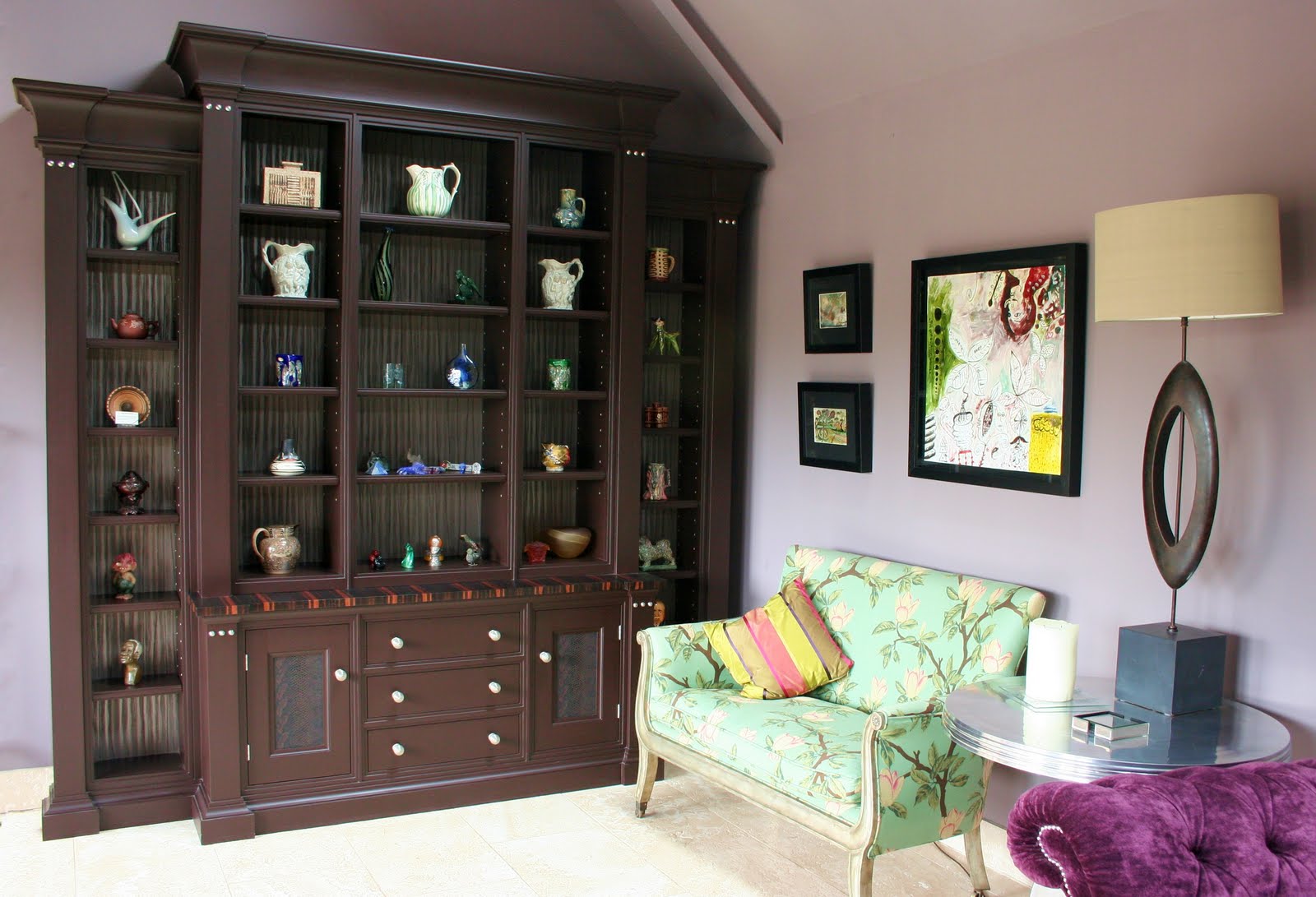
These days the option to develop bespoke solutions extends beyond large areas such as kitchens or bathrooms. We often provide clients with individual pieces of cabinetry and other furniture where designs are developed not just to satisfy physical needs, but also to meet their aesthetic desires.

I have the pleasure of regularly engaging local crafts people to create these items and know it can be a delight to see a concept develop into something tactile and tangible which satisfies an individual’s personal requirements; giving them an extra frisson of pleasure each time they walk past or touch the piece in question.

One of my favourite people to work with is Martin Holliday, Design Director for Chiselwood. Martin is a trained cabinet maker and has won a number of national awards for his kitchen designs which are truly innovative and naturally beautiful. His passion for wood is particularly infective and his designs for all manner of items including bookcases, wardrobes, study furniture, beds, dining tables and chairs are always right on the nail!


Martin started life as an engineer working with metal, but soon discovered that he could be far more creative in wood, which he says is “a living material I love”.

What might have once been a hobby has developed into a major family run business, which nurtures new talent at its Saxilby workshops, where Martin is able to tightly control all aspects of his business. The recent changes in the economy mean that he has also seen a marked increase in people showing an interest in taking up apprenticeships, guaranteeing these skills will not be lost for future generations.

Martin sums up his design inspiration as “to make something that looks beautiful, without sacrificing the practicality”. This is an important aspect to consider when designing something for your home – so ask around and do not settle on the first person you find. Personal recommendation or practical example is always the best solution and a good craftsman is likely to enhance your design to meet requirements you might not even have considered.


Modern materials mean that designs can be developed to incorporate much more flexibility, featuring a whole host of finishes. Although Martin Holliday has a passion for wood he says he is not fixed on any materials and chooses the right ones to suit the client also incorporating painted finishes, natural stones, acrylics and composites as the brief requires. “At the end of the day” Martin says,” it is about developing a design that works with both a client’s personality and property type”.

So if you are having difficulty finding that perfect piece for your room, or you want to create something to commemorate a special event, seek out the expertise local to you. Your investment could pay wisely for generations to come.

Jamie Hempsall, BIDA, is one of the region’s leading Interiors specialists. Contact him via studio@jamiehempsall.com or follow him on Twitter!


Contact details:
Martin Holliday at Chiselwood Ltd
Fossdyke House, Gainsborough Road, Saxilby, Lincoln, LN1 2JH
http://www.chiselwood.co.uk/
01522 704446


Wednesday, 13 January 2010

Banish the Winter Blues with Silver Shine

Yorkshire Post - 13th January 2010 - Life & Style Section : Homes


Interiors

Now that your Christmas decorations are packed away again, it can often feel as if the house has lost a little of its sparkle. Couple that with dark winter nights and unusual snow reflected light and you can have a recipe for the doldrums.


The ultimate way to bring more light in to your home is to knock down a wall to the outside! However, you can achieve a similar effect by creating an entire mirror wall (using a mosaic of large mirror pieces to add interest). Visually extending your room not only adds light, but promotes a feeling of space and wellbeing.

 
Antiqued glass helps to soften the look to make this feature work well in period homes; not to mention easier to keep clean. Work on a design with your glass merchant for an individual finish and incorporate off-cuts to keep the cost down.

If considering DIY installation be aware of sharp edges and handle your mirror with gloves whilst fixing. Ensure you have well prepared flat walls and only use mirror adhesive. Take your time and let each piece set in place before adding more. It may take a while, but the end result will be worth it.

If this seems a little extreme why not pep up your home by introducing a few smaller features that will shine away the gloom. These hints of Spring will help add light to your interiors and are sure to bring a smile to your face each time you see them.

A silvered cabinet or cupboard can act as a tremendous boost to lift otherwise muted rooms and pic up on any light source available. The overall effect is gentle, rather than dazzling. Soft silver works well against most colour palettes from the most neutral Taupe to rich Royal Blue.

Historically, silver leaf was used in night time entertaining rooms to reflect the shimmer of candle light to add extra spectacle. A modern equivalent of these pieces is the Short Regency Wave Cabinet in antiqued silver leaf which exudes old world charm (£1,280; www.julianchichester.com – 0207 622 2928).


 For those with a desire for the modern, consider the Madame Butterfly Tall Cabinet finished in a gentle silver gloss with a surprising lilac interior (£795; www.frenchbedroomcompany.co.uk – 08456 448022).

If you enjoy casual living why not introduce a Fatboy Beanbag in Silver to facilitate a little indulgent lounging now that the hard partying is over for another season? (£149.95; www.mooch.co.uk – 01280 814943).


Partner this up with the perfect funky storage and table solution in the shape of the Spitfire White Star Trunk from Halo. The steel cladding and rivets make this piece a sure talking point and centre piece (£949; www.haloliving.co.uk - 0161 923 0541).


However, it is the little hints that can often raise your spirits the most; an amusing trifle that catches the eye or is a pleasure to use. Dot these within your room to surprise and delight the senses.


The Bosign Silver Branch Hanger hints at walks in the woods without embracing the cold. They are perfect for jewellery, keys or the odd dog lead (£21; www.allupandon.co.uk – 0845 034 5050).

The Stainless Steel Zack Atacio Magazine Rack will help keep your rooms clutter free, whilst adding a splash of panache (£144.95; www.proleno.com – 0844 357 9855).


Ultimately, Hollywood has always been the king of equipping interiors with plenty of sparkle and the Silver Lobby Phone from Leekes epitomises 1930’s glamour; why not raise your spirits further by enjoying a few more chats to close friends (£60; www.leekes.co.uk – 0845 050 8240).


Jamie Hempsall, BIDA, is one of the region’s leading interior designers. Pose your questions to him via studio@jamiehempsall.com or telephone 01777 248463.


Tuesday, 5 January 2010

Marrying Ancient and Modern to Create the Perfect Bedroom

Yorkshire Post - 30th December 2009 - Life & Style Section : Homes


Interiors

ONE of our latest projects was for a client who had purchased a period home. They loved the dimensions of the master bedroom, but wanted a scheme both sympathetic to the architecture and reflecting their enjoyment of contemporary design.


Before we got to work

The trick in ensuring a modern design works well in a period environment is to play to the strengths of the building. In a property with high ceilings and large room dimensions go bold – big patterns and large, dramatic pieces with a slightly distressed appearance, rather than shiny finishes are the key to creating a look that does not feel over-engineered.


In a large room people often play safe keeping walls neutral, however that can lead to a vast bland look, emphasising the space, but not using it to best advantage. Period homes cry out for the use of wallpaper which softens and enriches the feel of the rooms.

We started by replacing beige paint with a feature wall of Villiers Blue wallpaper from the Zoffany Nureyev Collection (about £49 per roll). The tremendous combination of deep blue and gold with an antique faded look enhances the richness of the room and feels like it has always been there.

The rest of the walls were finished in contrasting Ham House Plain (from Zoffany's National Trust Collection, about £46 per roll). This paper has a slight sheen, softening the overall feel of the room. The woodwork was finished in Architect's White Eggshell and the ceiling was painted in Polar Bear emulsion (both from the Zoffany paint range). The fireplace was taken back to its original black to emphasis it as a feature.


The blue tones of the walls were reflected in the glass of the existing over mantle mirror and an antique chandelier was dressed in reclaimed aqua blue crystal droppers to add a dramatic feature light.

Luscious purple and light blue/green was introduced in the warm chenille used for part of the bedspread and the valance (the Prestigious Splendid range, about £23.50 per metre). Additional texture was introduced in the Astrakhan-inspired main fabric of the bed cover and cushions (Blomfield Opal by Andrew Martin, about £107 per metre).

Using an expensive accent fabric in a panel and combining it with a cheaper fabric for volume is a great interior design trick that allows you to get maximum visual impact without breaking the bank – it works well on bedspreads, curtains and cushions.


Thick velvet carpet in Rich Brown (Westend Prestige Velvet from Westex, about £54 per square metre) added warmth and comfort underfoot, as well as hiding some very average-looking stripped floorboards and quelling drafts and dust.


The addition of a bespoke oversized headboard covered in shimmering Teal Arkona Velvet Teal from Harlequin (about £39 per meter) brought the look right on trend.


The Temple Eglomise mirrored beside tables from Julian Chichester (£905) helped to take advantage of the large windows to bounce light into the room, without creating too many reflections. These were complemented by a pair of Burnt Gold Lerat Leaf Lamps with Prune Silk Shades (both from Porta Romana, about £770 each). A large Anna Cabinet in Dark Wood and Mirror from Julian Chichester (£2,675) added storage and impact.


Attention to detail is the key to period design and we completed the look by replacing white wall switches with retro-style toggle switches in brushed brass (about £19).


The end result was a room that the client said gave them joy to wake up in and made them want to stay in bed all day. The perfect response and an antidote to a chilly British winter.


Jamie Hempsall is a BIDA member and one of the region's leading interior designers. See more of his work at www.jamiehempsall. com or contact him on 01777 248463